
Contents
Outline of the Blog
Brief Overview
Characteristics of Mandala Tattoos
Techniques and Styles
Symbolism and Meaning
Choosing a Design
Placement and Size
Finding the Right Artist
Mandala Tattoo Gallery
Top 10 Tattoo Artists for Mandala Tattoos
Related Blog Posts
Introduction to Mandala Tattoos
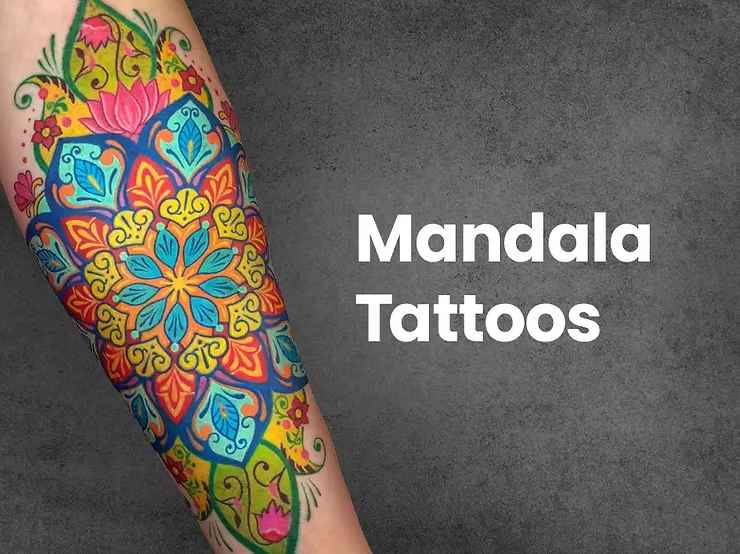
Sacred symbols representing balance, unity and spirituality, rather than just geometric shapes, Mandala Tattoos carry deeper meaning. A Sanskrit word, mandala means circle and represents eternity and perfection. Hinduism and Buddhism consider these intricate patterns helpful for meditation and spiritual enlightenment.
Mandalas are preferred in modern tattooing because of their deep symbolic significance along with their attractive visual aesthetics. Each mandala figure, large or small, symbolizes harmony between body, spirit and mind.
The Origin and Cultural Significance of Mandala Designs
Originating in Tibet and ancient India, the congregations have existed for thousands of years. In the past, monks used colored sand to create mandalas during meditation sessions to represent the transience of life. This revered art form gradually spread across cultures, influencing tattoo design in both East and West.
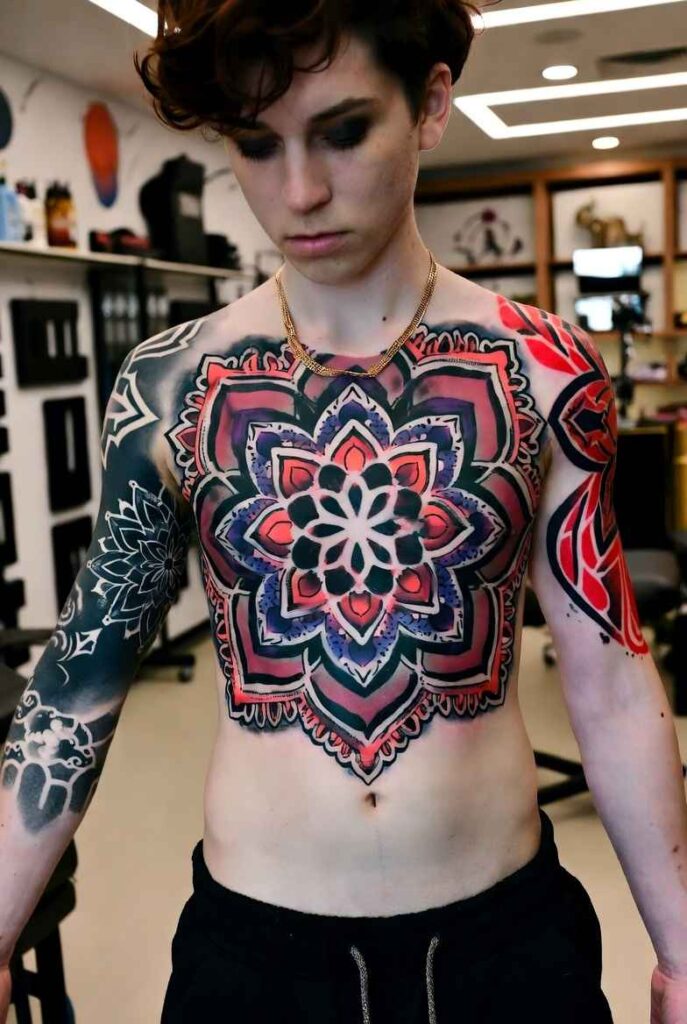
In the Buddhist and Hindu traditions, mandalas assist the believer in their quest for enlightenment, acting as instruments of spirituality. Every design represents a journey from the outermost ring, which symbolizes the material world, to spiritual enlightenment at the very center. Today, tattoo artists utilize these motifs to signify tranquility, harmony, and awareness.
The Meaning Behind Mandala Tattoos
Depending on the design, placement, and shape, mandala tattoos can have several levels of meaning.
Here are a few typical interpretations:
1. Spiritual Growth
Usually, mandalas stand for spiritual and personal development. While the mandala’s core represents a state of self-awareness, the surrounding patterns represent change and the path toward enlightenment.
2. Harmony and Balance
The symmetrical mandala pattern symbolizes balance and harmony in life. They inspire us to find inner peace amidst turmoil and live honestly.
3. Eternity and Wholeness
The circle-like form of the mandalas symbolizes the never-ending cyclical occurrence of birth, death, and rebirth. Mandala tattoos are mostly popular for being a representation of relationships, new beginnings, and forever love.
Popular Mandala Tattoo Styles and Designs
Mandala tattoos have an extensive range of personalization, as they combine cultural symbolism with personal expression. Given below are some popular variations in design.
1. Floral Mandala Tattoo
A flower mandala combines the beauty of nature with flawless geometry. Typical decorations include lotus, rose or vine petals, all representing purity, love and spiritual awakening.
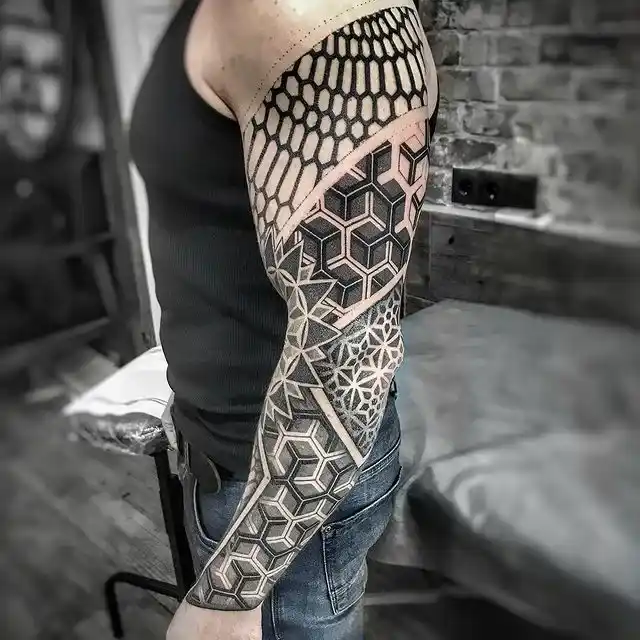
2. Geometric Mandala Tattoo
This design emphasizes mathematical patterns and exact symmetry. For people who value logic, order, and balance in life, it’s ideal.
3. Animal-Inspired Mandala Tattoo
Artists often combine mandala patterns with animal motifs such as owls, lions or elephants. These tattoos stand for bravery, strength and wisdom.
4. Black and Grey Mandala Tattoo
The depth and detail of each line are highlighted by the classic black and grey ink, creating a timeless style that complements nearly any skin tone and placement.
Best Placement Ideas for Mandala Tattoos
Where applied, a mandala tattoo will have a deep effect. Depending on the style and meaning, you can choose patches that bring out their symmetry and detail.
1. Back and Shoulders
Strength and individual might are symbolized by a huge mandala on the back. It’s a popular location for elaborate, full-circle patterns.
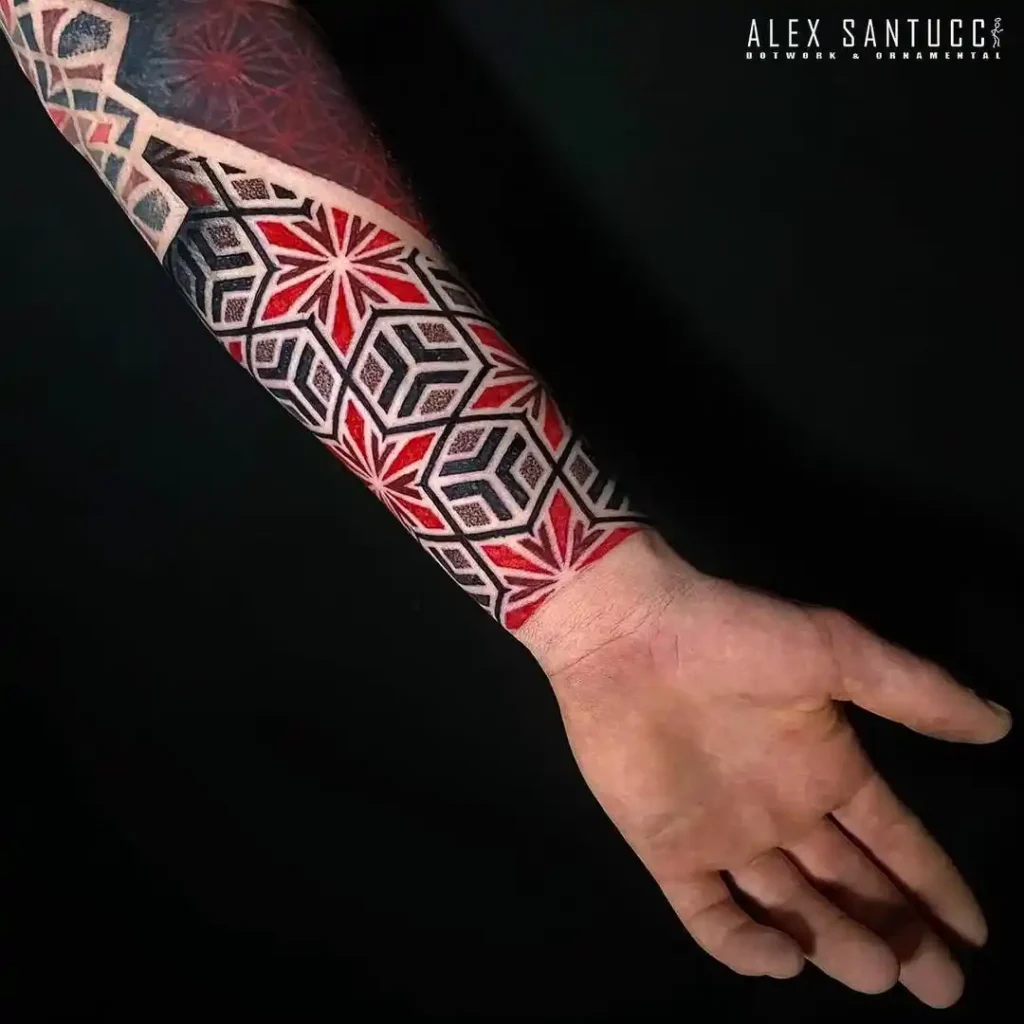
2. Forearm and Wrist
For a smaller, more noticeable tattoo, the wrist or forearm is the best place.These places often represent daily inspiration and awareness.
3. Thigh and Leg
For travelers or spiritual explorers, mandala tattoos on the legs represent mobility, development, and life’s journey.
4. Chest and Sternum
These arrangements provide a hint of sophistication and depth, especially for women who want to project beauty, balance, and self-assurance.
How to Care for a Mandala Tattoo
Proper tattoo care allows maintenance of the sharp details and quality of your mandala design; therefore, carefully follow these simple steps.
1. Keep the tattoo hydrated and clean.
2. Avoid swimming and direct sunlight while you’re healing.
3. As directed by your artist, apply a fragrance-free ointment.
4. Do not rub or peel the tattoo while it is healing.
If you take good care of your mandala tattoo, it will stay colorful and significant for many years to come.
Mandala Tattoos in Modern Culture
Mandala tattoos now have more than their traditional meanings. Mandalas are reinterpreted with contemporary twists by artists around the world, who may incorporate watercolor splashes, tribal lines, or minimalist aesthetics. The art is embraced by influencers, yoga practitioners, and spiritual seekers as a representation of inner peace and mindfulness.
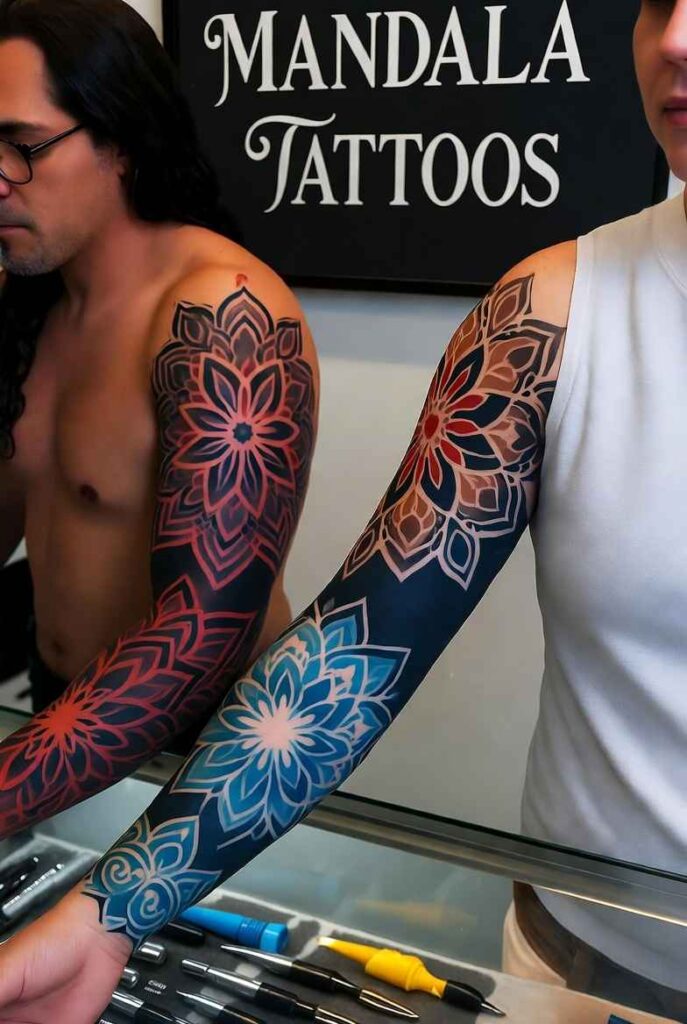
Mandala tattoos, which stand for resiliency and equilibrium in a chaotic world, are also frequently chosen by people as a reminder of their healing process.
Recommended External Resources
Check out these resources for additional motivation and a more thorough comprehension of mandala symbolism.
Conclusion
More than just physical art, mandala tattoos symbolize the feeling that unites one’s emotional and physical self. Each line, circle, and petal is rich with meaning and all are reminders of harmony, balance, and eternal growth. Mandala tattoos can be a timeless art form and an expression of the soul, whether one is attracted by their spiritual significance or simply their mesmerizing design.